
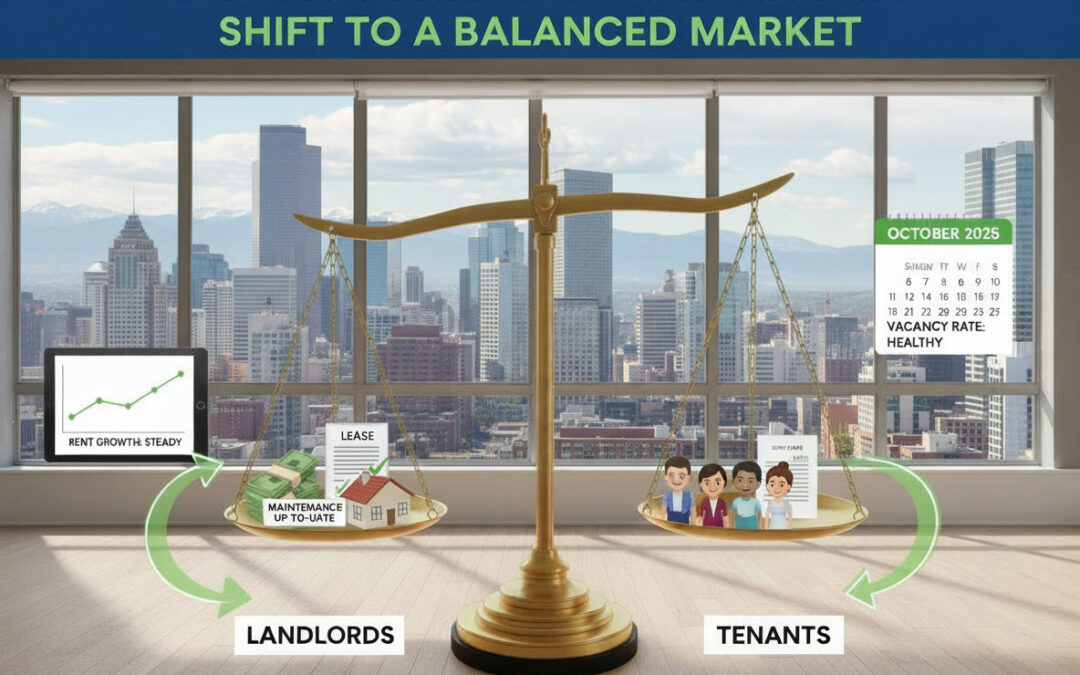

It’s been 14 months since DenCO Property Management’s (DenCO) October 2024 update about the Denver rental market. The most notable change from 2024 is that the market softness has spread across all property types, including single-family homes.
The Denver rental market is cooling and shifting toward stabilization, which means most properties are experiencing longer vacancies and rent decreases. However, we forecast a modest rebound in early 2026, as slowing new construction allows landlords to raise rents slightly amid an improving supply/demand balance.
The Current State of the Denver Rental Market
Average Rents and Trends
According to the Apartment Association of Metro Denver, in November 2025, the average monthly rent across all property types in Denver was $2,087, a slight increase from 2024. The modest increase is a false positive, as rental market trends indicate a broader softening.
In 2024, 20,000 apartments became available, increasing the rental unit supply in Denver. As predicted, vacancy rates rose to the highest level in many years, creating a “renter’s market.” The good news? New apartment construction tapered off in 2025. DenCO projects slight rent growth in well-located single-family homes, but condo and apartment rents will remain flat or decline. We expect home rentals in good locations to take longer to fill in 2026.
- Condos and apartments: Down approximately $48 per month
- Single-family homes: Down over $140 per month
National Context: It’s Not Just Denver
National data tells a similar story. Rental growth has been flat to negative since mid-2023, even in markets that have historically been resilient, including Denver. Notably, the most significant downward pressure is being felt by newer properties—particularly those built within the last decade—which are now adjusting after several years of record-high rents driven by aggressive pricing and rapid lease-up expectations.
Four Key Factors Driving the Slowdown
Economic Uncertainty: Financial stress among renters is becoming more apparent. After four years of high inflation, it is hard to put the genie back in the bottle. When factoring in other everyday expenses such as utilities, groceries, and transportation, total living costs for Denver renters have risen by roughly 30% since 2019. Tenants are renewing their leases, knowing landlords want to keep good tenants, or they are looking for less expensive housing options.
Sales Market Struggles: In 2025, Denver homes spent about 60–70 days on the market before going under contract, a notably longer time compared to Denver’s pre-pandemic housing boom. For comparison, in 2019, the average home was on the market for 19-35 days.
Declining In-Migration: According to a recent Denver Gazette article, Colorado has experienced steady population decline since 2020. Fewer people moving to the state means less demand for rentals, and some analysts are even predicting Colorado could see negative migration next year. The article states the main reasons for the decrease in migration are the cost of living and the state’s burdensome regulatory environment.
Challenging Legal Environment: Colorado property managers and owners now face a slew of new rental laws, including no-fault evictions, screening limitations, price stabilization during disasters, and the warranty of habitability. DenCO blogs extensively on these regulations. Please click here to go to your blog page.
What This Means for Denver Rental Property Management Companies
Despite the slowdown, DenCO still believes the Denver market has good fundamentals. Vacancy is not exploding—it is simply higher than we have seen in many years. A balanced market is the new norm as rents tread water or decline from previous record highs. DenCO believes the keys to rental management success are as follows:
- Price strategically: Clinging to last year’s rental rates may result in longer vacancies. Be responsive to current market feedback and competitive with your pricing.
- Maintain your properties: Well-maintained properties will continue to stand out and lease faster. Quality matters more in a balanced market.
- Market aggressively: Visibility matters more in a slower market.
- Prioritize tenant retention: Keeping good tenants is more valuable than ever, so be flexible on lease terms and pricing.
- Keep rent increases reasonable: Modest, market-appropriate increases will help maintain occupancy.
- Respond quickly: In a balanced market, speed matters. Quick responses to repair requests and tenant applications can make the difference.
- Stay informed on local market shifts: Pay attention to submarket dynamics—different neighborhoods will perform differently.
- Prepare financially for slower rent growth: Adjust cash flow expectations and budget accordingly.
Opportunities for Strategic Investors
Soft rental markets create opportunities for well-positioned investors. As some investors choose to exit, contrarian rental property investors buy properties. They look for homes in need of improvement and with discounted sales prices. Properties bought right offer the potential to renovate, reposition, and capture stronger rents as rental markets improve. For more information about contrarian rental property investing, click here to view our blog titled, “Investing in Denver Real Estate in 2025: A Contrarian’s Perspective.”
Risk Factors to Watch in the Denver Rental Market
Several factors could impact the forecasted recovery:
- Prolonged oversupply: Modern large multifamily complexes backed by institutional investors may try to “wait out” the slump. Their empty units prolong the oversupply, suppressing rents.
- Macro-economic shifts: Weak employment trends and migration patterns mentioned above may weaken demand and slow the forecasted rebound. Lower mortgage rates in 2026 should regenerate the Denver real estate market.
- Regulatory changes: Continued housing, landlord, and tenant legislation could further affect profitability and make Colorado less attractive for rental real estate investment.
Final Thoughts
DenCO believes that paying attention to market dynamics, focusing on property upkeep, and retaining tenants will position our owners for stable returns both now and as the market recovers in 2026. We inform our owners about market trends that might affect the management and value of their rental property investments. We have been in business since 1999 and manage over 175 homes, duplexes, and apartment rentals in the DU, Washington Park, and other Denver neighborhoods. Please call 303-722-9688 or fill out this form.
Recent Comments